
Why Concrete Cracks in Augusta, Georgia (What Homeowners Need to Know)
Concrete cracking is one of the most common and frustrating issues homeowners face in Augusta, Georgia. Many people assume cracks are just a normal part of aging or weathering — but in reality, most concrete cracks are the result of predictable local conditions or installation issues that could have been prevented.
If you’re noticing cracks in your driveway, patio, slab foundation, garage floor, or sidewalks, understanding the root causes can help you avoid costly repairs, protect your home’s value, and make smarter decisions when hiring a concrete contractor in Augusta, GA.
1. The #1 Reason: Clay Soil Movement in Augustaa
The biggest factor behind concrete cracking in our area isn’t the concrete itself — it’s what’s beneath it
Expansive Clay Soil
Much of the soil around Augusta is clay‑rich — and clay soil behaves very differently from sandy or loamy soil. When wet, clay expands; when dry, it shrinks. This constant swelling and shrinking creates soil movement under concrete slabs that causes stress, shifting, and ultimately cracking.
This movement affects both:
Concrete slabs and patios
Foundations and garage floors
Even a well‑poured slab can crack if the soil below wasn’t properly evaluated and compacted before the pour.
2. Seasonal Weather Patterns in Augusta
Augusta’s humid subtropical climate — hot summers, cool winters, and heavy rain periods — plays a big role too.
Moisture Fluctuations
Heavy thunderstorms in spring and summer saturate the ground quickly. During dry spells, that same soil can contract significantly. This soil expansion and contraction cycle puts enormous stress on rigid concrete, leading to cracks over time.
Rapid Drying & Shrinkage
During Georgia’s intense summer heat, the top layer of fresh concrete can dry too fast, leading to surface shrinkage cracks if not properly cured.
3. Installation Mistakes That Make Cracks Worse
While local conditions matter, most homeowners are shocked how often cracks are linked to poor installation practices.
• Poor Subgrade Compaction
If the soil and gravel base beneath your slab isn’t properly compacted, soft pockets remain that eventually shift and settle — creating uneven support and cracks above.
• Skipping Gravel or Drainage Layers
A gravel base helps drain water away from the slab. Skipping this causes water to saturate the soil under the slab — leading to swelling and cracking.
• rushed Curing
Concrete needs moisture during curing. Letting it dry out too quickly — a common DIY mistake and contractor shortcut — leads to early cracks.
• Lack of Control Joints
Control joints are intentional weak points cut into the slab to direct where cracks occur. Without them, random cracking is almost inevitable.
4. Homeowner Experiences: What Locals Are Saying
Homeowners across Augusta and surrounding Georgia areas share common stories about cracking concrete:
🔹 Some notice cracks shortly after installation — often a sign of poor base preparation.
🔹 Other homeowners mention water pooling near slabs or driveways after storms, which accelerates cracking.
🔹 Many report cracks that appear after long dry spells followed by heavy rains — a classic soil heave pattern in clay soils.
These patterns repeat because they reflect real soil and climate challenges specific to this region, not just random aging.
5. Cracks Aren’t Just Cosmetic — They Can Be Structural
Too many homeowners dismiss cracks as just aesthetic — but that’s a costly assumption.
Small Cracks Can Become Big Problems
Hairline cracks may seem harmless, but they:
Allow water to seep in
Lead to deeper structural weakening
Encourage soil erosion under the slab
Over time, these can turn into:
Sinkholes beneath patios or driveways
Uneven, hazardous surfaces
Structural issues in foundations or garage floors
In some cases, cracks are the first visible sign of settlement or soil movement that’s already affecting your home’s stability.
6. Other Contributing Factors in Augusta Homes
Beyond soil and installation, there are additional influences worth noting:
• Tree Roots & Landscaping
Large tree roots soak up moisture and disturb the soil moisture balance. This can create differential settlement, where one area dries and contracts more than another, leading to cracking.
• Poor Drainage and Grading
If water runs toward your home rather than away from it, soil stays wetter and pushes harder on concrete surfaces — especially around foundations.
• Erosion and Underground Water Flow
Water that moves beneath slabs due to poor yard grading or irrigation can erode soil support and cause voids beneath concrete.
7. Types of Cracks & What They Mean
1. Hairline Cracks
Often due to drying shrinkage — usually cosmetic if they aren’t widening.
2. Wide Cracks or Gaps
Often indicate serious soil movement or poor compaction. They may widen over time.
3. Stair‑Step Cracks in Foundations
Can signal differential settlement — one side sinking more than another.
4. Horizontal Cracks
These can indicate pressure from expanding soil pushing sideways rather than downward.
Each type tells a different story about what’s happening beneath your home.
8. When to Be Concerned — and When Not To
While many hairline cracks are normal, a few warning signs suggest a more serious issue:
Red Flags
Cracks wider than ¼ inch
Uneven or sinking slabs
Cracks accompanied by doors/windows sticking
Water seeping through cracks
If you notice these, it’s smart to have a professional concrete specialist or foundation repair expert inspect your home.
9. Solutions Augusta Homeowners Should Know
• Professional Inspection
Before repairing any crack, have a qualified concrete professional assess the underlying cause. Fixing the symptom without addressing the cause often leads to recurring cracks.
• Concrete Lifting and Leveling
Instead of full replacement, sinking slabs can often be stabilized using polyurethane foam or mud jacking — a cost‑effective method used locally in Augusta.
• Proper Drainage & Landscaping
Fix gutters, improve yard grading, and divert water away from the foundation.
• Soil Stabilization
Under some conditions, soil can be treated to reduce its movement before pouring concrete.
• Re‑Pouring with Control Joints & Quality Bases
If replacement is needed, ensuring proper base compaction, gravel layers, drainage, and control joints are included goes a long way in preventing future cracking.
10. The Bottom Line for Augusta Homeowners
Clay soil movement
Weather patterns
Proper installation
Drainage and maintenance
While you can’t control the climate, you can control how concrete is installed and maintained. Working with experienced, local professionals who understand Augusta’s unique conditions — and who prioritize real workmanship over shortcuts — will help your concrete last longer and perform better.
At the end of the day, most concrete cracks boil down to what happened before, during, and after the concrete was poured — and that’s where smart homeowners get the best return on investment.
September 29 2025
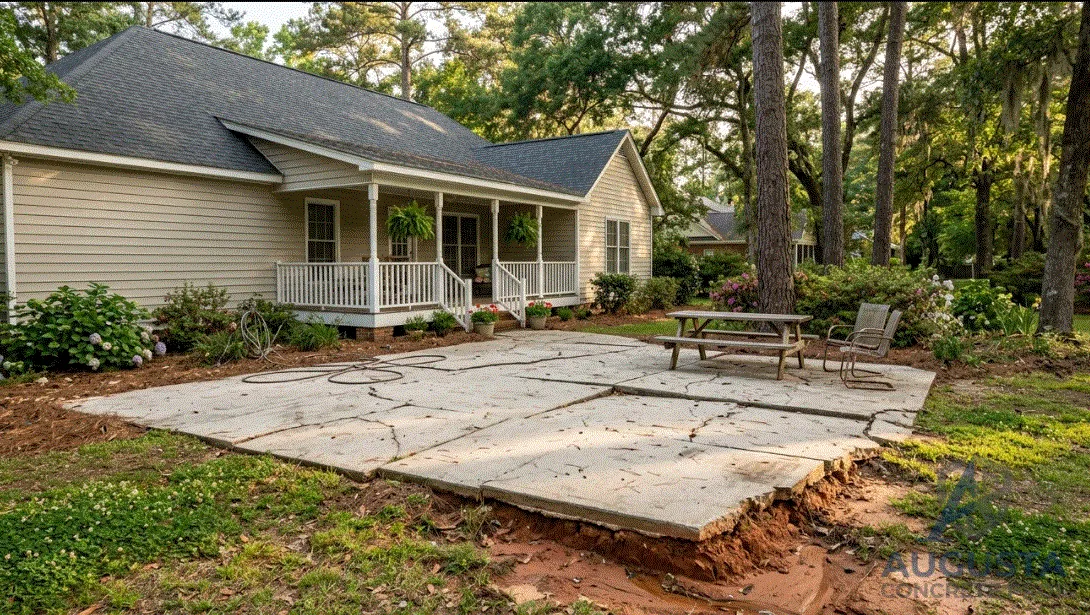
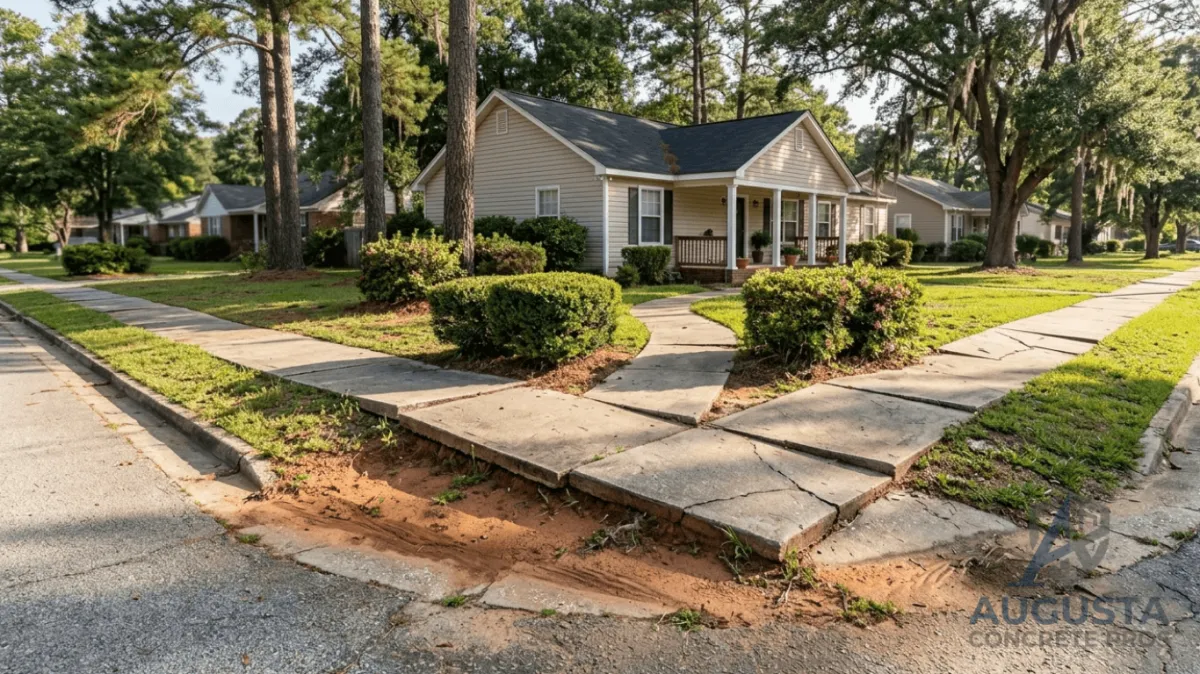
Uneven or sunken concrete is a very common problem homeowners face in Augusta, Georgia. You might notice your driveway sinking in certain areas, your patio becoming uneven, or sidewalks creating trip hazards. While it may seem like a minor issue at first, it often points to deeper problems beneath the surface.....
November 2 2025
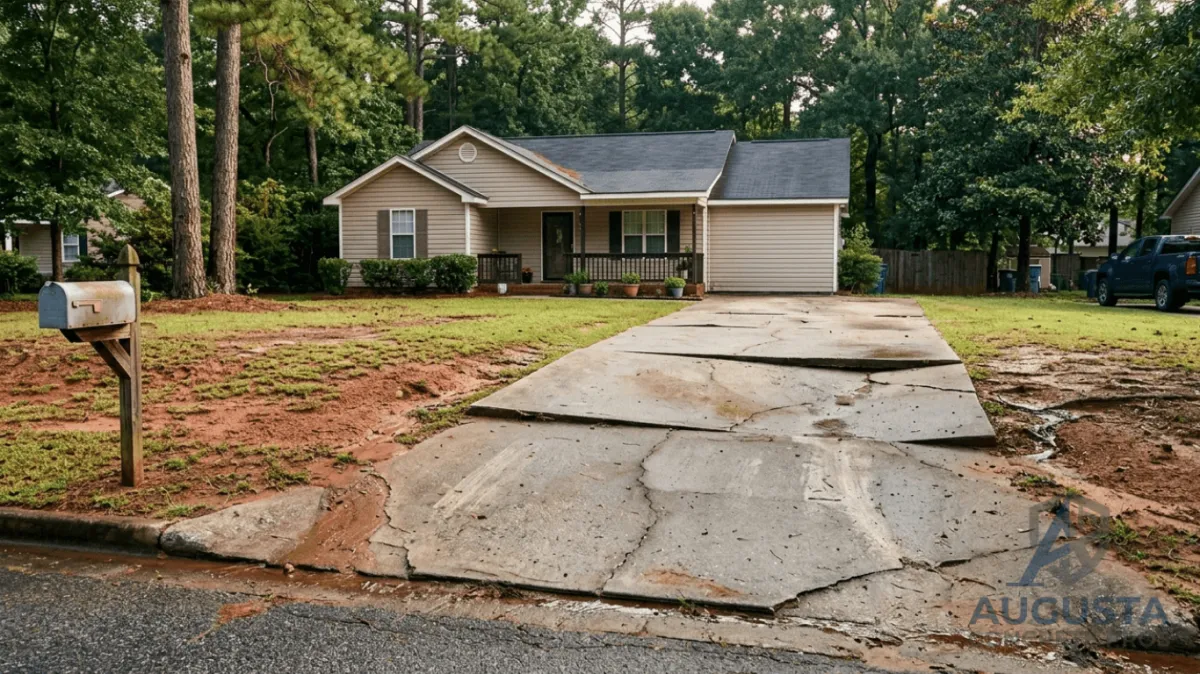
Poor Workmanship: The Hidden Concrete Problem in Augusta, Georgia
When homeowners in Augusta, Georgia deal with cracked driveways, sinking slabs, or surface damage, many assume it’s just due to weather or soil conditions. While those factors do play a role, there’s a much bigger issue that often goes unnoticed—poor workmanship.
This hidden problem is one of the leading causes of concrete failure, and unfortunately, it’s more common than many homeowners realize.......